
There is something almost rebellious about growing up in Hollywood and deciding that you want absolutely nothing to do with it. In an era where celebrity children are launching skincare lines before they can legally vote and where TikTok follower counts seem to matter more than character, the story of Henry Aronofsky feels like a breath of fresh air—or perhaps a throwback to a different time entirely.
Henry Aronofsky, now 18, represents one of the most fascinating case studies in modern celebrity culture precisely because he has chosen to be unfamous. Born on May 31, 2006, in New York City to two of the most respected figures in contemporary cinema, Henry has spent his entire life carefully shielded from the public eye. His father, Darren Aronofsky, is the visionary director behind mind-bending psychological dramas like Black Swan, Requiem for a Dream, and The Whale. His mother, Rachel Weisz, won an Academy Award for her haunting performance in The Constant Gardener and has built a career defined by intelligence, versatility, and fierce independence.
Most children born into this level of Hollywood royalty would have Instagram accounts verified by age twelve, would have walked their first red carpet before losing their baby teeth, and would be regularly featured in “Nepo Babies to Watch” listicles. Henry, however, has taken a different path—one that inspires respect and admiration, reflecting his character and his parents’ values more than any social media post ever could. This article explores who Henry Aronofsky really is, why his story matters in today’s celebrity-obsessed culture, and what we can learn from a young man who looked at the spotlight and simply said, “No, thank you.”
Early Life and Hollywood Royalty
When Henry Aronofsky entered the world in the spring of 2006, he was born into what can only be described as cinematic aristocracy. His father, Darren, had already established himself as one of the most daring directors of his generation with Pi (1998) and Requiem for a Dream (2000). These films announced the arrival of a filmmaker unafraid to explore the darkest corners of human psychology. His mother, Rachel, was riding high on critical acclaim for The Constant Gardener, a performance that would eventually earn her an Oscar for Best Supporting Actress.
The early years of Henry’s life coincided with the height of his parents’ relationship. Darren and Rachel had begun dating in 2001, and by the time Henry was born, they had been together for five years. They were that rare Hollywood couple who seemed to balance commercial success with artistic integrity, and they approached parenthood with the same seriousness they brought to their craft. From the very beginning, they made a conscious decision that would define Henry’s childhood: he would be protected from the public eye at all costs.
I have always found this decision particularly admirable because it runs counter to every incentive structure in modern Hollywood. When you are a celebrity, your child becomes content. Paparazzi shots of “celebrity baby bumps” sell for thousands of dollars. First photos of newborns are auctioned to magazines for millions of dollars. The children themselves become brands before they can even walk. But Darren and Rachel refused to play this game. They did not sell baby photos. They did not bring Henry to movie premieres. They did not post constant updates about his milestones on social media (this was easier in 2006, before Instagram existed, but the principle remains).
Instead, Henry grew up in New York City, away from the concentrated madness of Los Angeles. New York, for all its intensity, offers a different kind of anonymity than LA. You can walk down the street, take the subway, or go to the grocery store without being surrounded by the entertainment industry. The family lived in the East Village, a neighborhood known for its artistic history but also for respecting privacy. Neighbors might recognize Rachel or Darren, but New Yorkers have a way of pretending they do not see celebrities—a protective anonymity that Los Angeles simply cannot provide.
The values that Darren and Rachel instilled in Henry during these early years would prove crucial when their relationship ended. They taught him that his worth was not tied to his parents’ fame, that he was entitled to a private life simply by virtue of being human, and that creativity and imagination were more important than recognition or visibility.
Navigating Parents’ Separation with Grace
In 2010, when Henry was just four years old, his parents announced their separation. In Hollywood terms, this could have been catastrophic. Celebrity breakups often become public spectacles, with custody battles played out in tabloids and children used as pawns in PR wars. Think of the messy divorces that dominate entertainment news—the accusations, the competing narratives, the children caught in the crossfire.
Darren and Rachel handled their split differently. They released a brief statement confirming the separation, emphasized their commitment to co-parenting, and then refused to discuss it further. There were no tell-all interviews. There were no leaked stories about who did what to whom. They treated their separation as a private matter between two adults who shared a child, which is exactly what it was.
For Henry, this meant stability during a time that could have been chaotic. Both parents remained in New York City, which allowed Henry to maintain consistent relationships with each of them without the disruption of long-distance travel or competing schedules. They established a co-parenting arrangement that prioritized his needs over their convenience or their egos.
I think about this often when I see how other celebrity separations play out in the media. The damage done to children when parents use them as weapons is incalculable and lasts for decades. Henry was spared this trauma because his parents, despite no longer being romantic partners, remained united in their commitment to his well-being. They attended school events together. They coordinated schedules. They presented a united front whenever Henry needed them to.
This period also established a pattern that would continue throughout Henry’s life: his parents’ personal lives would remain separate from his upbringing. When Rachel began dating Daniel Craig, the James Bond actor, she did not immediately parade the relationship in front of Henry. When Darren dated various people over the years, he kept those relationships private. Henry was not forced to process adult romantic complications before he was ready.
The separation, handled with such maturity by his parents, actually reinforced the lessons about privacy that they had been teaching him since birth. He learned that difficult transitions do not require public performance, that pain can be processed privately, and that family structures can evolve without dissolving entirely.
A New Family Dynamic: Blended but Grounded
In 2011, Rachel Weisz married Daniel Craig in a secret ceremony that surprised even Hollywood insiders. The wedding took place in upstate New York with just four guests present—Rachel’s son Henry, Daniel’s daughter Ella, and two family friends. This was not a celebrity wedding designed for magazine coverage. This was a family committing to each other in the most intimate way possible.
For Henry, then five years old, this meant gaining a stepfather and a stepsister. Daniel Craig brought his own daughter from a previous relationship into the marriage, creating an instant blended family. The addition of a half-sister in 2018, when Rachel gave birth to a daughter, further complicated but enriched this family structure.
What strikes me most about this blended family is how successfully they have maintained privacy despite the enormous fame of both parents. Daniel Craig is James Bond—literally one of the most recognizable faces on the planet. Rachel Weisz is an Oscar-winning actress who commands attention whenever she enters a room. Yet their family life remains remarkably normal.
Henry’s relationship with Daniel Craig appears to be genuinely close. Craig has spoken in rare interviews about the responsibility of step-parenting, emphasizing that he never tried to replace Darren in Henry’s life but rather to be an additional supportive presence. This is the gold standard for step-parenting, especially in high-profile families where territorial disputes could easily become public fodder.
The birth of Henry’s half-sister in 2018 added another dimension to his family life. At twelve years old, he became a big brother, responsible for helping guide a new life through the same protected childhood he had experienced. The age gap meant that Henry was old enough to understand the unique circumstances of his sister’s birth—she would grow up with two famous parents who were actually married to each other, while he navigated between two households—but also old enough to appreciate the joy of sibling connection.
Rachel has spoken in interviews about how Henry has embraced his role as older brother, describing him as protective and loving. These small glimpses into their family dynamic suggest that, despite the unconventional structure—famous parents, step-parents, half-siblings—Henry has experienced something increasingly rare in modern life: a stable, loving family environment in which the adults prioritize the children’s needs over their own public image.
Education and the Path Less Traveled
In the fall of 2024, news broke that Henry Aronofsky had enrolled at Harvard University. For most celebrity children, this would be an opportunity for a fresh round of publicity—campus photos, interviews about “following in famous footsteps,” perhaps even a carefully managed social media presence documenting college life. Henry, true to form, has maintained complete silence about his academic career.
What we do know about Henry’s interests suggests he has chosen a path quite different from his parents. While both Darren and Rachel pursued careers in the arts—film and acting, respectively—Henry appears drawn toward technology and engineering. This is not entirely surprising when you consider Darren Aronofsky’s background; before becoming a filmmaker, Darren studied anthropology and biology at Harvard, and his films often explore scientific and mathematical concepts. The genetic predisposition toward intellectual curiosity runs strong in this family.
More specifically, Henry has shown interest in community-based technology projects. He has been involved with NYC Mesh, a community-owned network that provides internet access to underserved areas of New York City. This volunteer work says something important about his values. Rather than using his privilege to pursue entertainment industry connections or social media influence, he has chosen to work on infrastructure projects that benefit ordinary people.
I find this choice particularly meaningful because it represents a genuine alternative to the expected trajectory. The “nepo baby” conversation has dominated Hollywood discourse in recent years, with legitimate criticisms about how celebrity children receive opportunities denied to equally talented but less connected individuals. But Henry’s path suggests another possibility: using privilege not to take opportunities from others, but to pursue fields where connections matter less than competence.
Harvard, of course, is not exactly a rejection of privilege. It remains one of the most exclusive institutions in the world, and having famous, wealthy parents certainly does not hurt one’s chances of admission. However, choosing to study engineering or computer science rather than film or theater suggests genuine intellectual interests rather than a calculated career in entertainment.
The decision to pursue higher education seriously—rather than treating college as a social experience or a brief pause before launching an influencer career—also distinguishes Henry from many of his celebrity peers. He appears to be taking advantage of the educational opportunities his parents’ success has provided, rather than relying on that success to bypass traditional achievement.
Life Away from the Cameras: The Art of Being Unseen
Perhaps the most remarkable aspect of Henry Aronofsky’s life is what is not known about it. In an age where privacy has become currency—where celebrities “share their truth” and “get vulnerable” for brand partnerships and follower growth—Henry has achieved something genuinely unusual: actual privacy.
He has no public social media accounts. There are no verified Instagram profiles, no Twitter handles, no TikTok presence where he dances or shares “day in my life” content. When he is photographed by paparazzi —which happens rarely —the photos show a young man dressed normally—jeans, T-shirts, sneakers—walking down the street, looking exactly like any other New Yorker his age. He does not pose. He does not court attention. He simply exists.
Rachel Weisz has spoken about Henry’s attitude toward fame in rare interviews, noting that he has never shown interest in the celebrity aspect of his parents’ lives. This is not the performative modesty that some celebrity children adopt before launching their own brands. This appears to be a genuine disinterest in public recognition.
I think this represents a kind of psychological health that is rare among children of famous parents. Many celebrity kids grow up with warped relationships with attention. They crave it because it represents love and validation, or they resent it because it represents intrusion and violation. Henry seems to have bypassed this entire dynamic. He treats fame as irrelevant to his identity, neither desirable nor objectionable, simply not his concern.
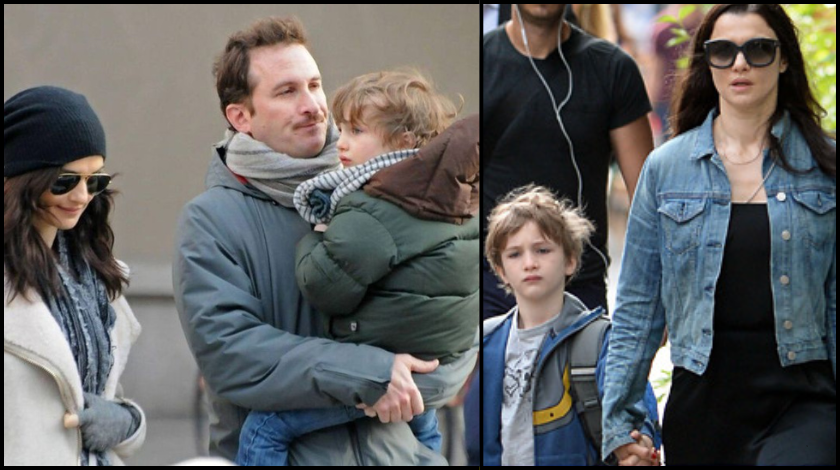
The paparazzi photos that do exist of Henry tell their own story. In images taken over the years, we see him growing from a child holding his mother’s hand to a teenager walking beside her to a young adult moving independently through the city. In none of these photos does he appear to be performing for the camera. He does not smile artificially or scowl dramatically. He simply walks, occasionally glancing at the photographers with what appears to be mild curiosity rather than anger or excitement.
This ability to remain normal in abnormal circumstances requires tremendous internal stability. It suggests that Henry’s parents succeeded in their goal of giving him a grounded childhood, one where he developed an identity separate from their public personas. He knows who he is, and that knowledge does not depend on external validation or recognition.
The Creative Gene: Nature, Nurture, and Future Possibilities
With parents like Darren Aronofsky and Rachel Weisz, Henry was never going to be ordinary. Both of his parents possess rare creative intelligence—Darren’s ability to visualize complex psychological states, Rachel’s capacity for emotional truth-telling through performance. These are not learned skills; they represent genuine artistic gifts that combine genetic predisposition with developed craft.
Childhood stories about Henry suggest he inherited this creative imagination. Rachel has mentioned in interviews that Henry was always building things as a child—constructing elaborate structures, taking apart electronics to understand how they worked, creating imaginary worlds with detailed internal logic. This sounds more like the childhood of an engineer or architect than that of a future actor.
Darren’s films often explore obsession, the drive to create, and the thin line between genius and madness. Rachel’s performances consistently demonstrate emotional intelligence and psychological insight. Henry appears to have combined these inheritances in his own way: the technical precision and obsessive focus of his father applied to practical problems, the emotional intelligence of his mother directed toward understanding systems and infrastructure rather than characters.
The question of whether Henry will eventually pursue film or acting remains open. He is only eighteen, and most people do not have their career paths mapped out at that age, regardless of their parents’ professions. However, the evidence suggests that if he does enter a creative field, it will be on his own terms and likely in a different medium than his parents.
Some celebrity children rebel against their parents by rejecting the arts entirely and becoming bankers or lawyers to differentiate themselves. Others rebel by trying to outdo their parents in the same field, leading to intense pressure and often public failure. Henry appears to be charting a third course: pursuing his own interests without either rejection or competition, simply doing what genuinely engages him.
This is perhaps the healthiest possible response to having famous parents. He does not need to become a filmmaker to prove he is his father’s son, nor does he need to become an accountant to prove he is different. He can simply be Henry, whatever that means for him, and trust that his identity does not depend on his career choices.
What Makes Henry Different: A Study in Conscious Privacy
To understand why Henry Aronofsky’s story matters, it helps to compare him to other celebrity children who have taken different paths. The current generation of Hollywood offspring includes many who have enthusiastically embraced fame—launching YouTube channels at 14, becoming TikTok influencers before they can drive, and treating their parents’ fame as a launching pad for their own brands.
There is nothing inherently wrong with this approach. Many celebrity children are talented in their own right, and the entertainment industry has always been nepotistic. However, the contrast makes Henry’s choices more striking. He represents a different model for handling inherited fame: not exploitation or rejection, but simple indifference.
This indifference is harder to maintain than it appears. The incentives to become public are enormous. There is money to be made, attention to be gained, validation to be collected. Social media platforms are designed to make fame addictive, to turn recognition into a drug that users constantly crave. Resisting these pressures requires not just parental protection but internal conviction.
Henry’s ability to maintain privacy also reflects well on his parents’ parenting. Darren and Rachel did not just keep him out of the public eye; they apparently raised him with values that make public attention unappealing. They taught him that worth comes from character and achievement, not from recognition. They demonstrated through their own behavior that creativity matters more than celebrity.
I think there is something important here for broader conversations about fame and social media. We live in an era where young people are growing up with the assumption that visibility is inherently valuable, that being known by strangers is a legitimate goal. Henry’s story suggests an alternative: that a good life can be lived entirely in private, that achievements matter even if no one knows about them, that happiness does not require an audience.
This is not antisocial or reclusive. By all accounts, Henry has friends, participates in community projects, and engages with the world. He simply does not engage through mass media. He has relationships rather than followers, experiences rather than content, a life rather than a brand.
Conclusion
Henry Aronofsky will probably never read this article, and that seems appropriate. He has spent eighteen years building a life that does not depend on public recognition, and there is no reason to think he will change course now. His story matters not because he is famous—he actively avoids fame—but because he represents a possibility that seems increasingly rare in our attention economy.
In a world that constantly tells young people to build their brand, grow their following, and monetize their personality, Henry has chosen substance over style, privacy over publicity, and authentic relationships over parasocial connections. Whether he becomes an engineer, a filmmaker, a teacher, or something entirely unexpected, he has already demonstrated the most important kind of success: the ability to know himself and live according to his own values.
His parents deserve credit for this outcome. Darren Aronofsky and Rachel Weisz could have exploited their son for publicity, turned him into a celebrity child brand, and used his childhood to advance their own careers. Instead, they protected him, grounded him, and gave him the freedom to become whoever he wanted. In an industry not known for healthy parenting, they have set a standard that others would do well to follow.
For the rest of us, Henry’s story offers a reminder that visibility is a choice, not a requirement. We do not have to share everything to matter. We do not need an audience to validate our experiences. We can simply live, work, love, and grow without documenting every moment for public consumption. In an age of oversharing, Henry Aronofsky’s privacy is not just a personal choice—it is a quiet revolution.
Frequently Asked Questions (FAQ)
Who is Henry Aronofsky? Henry Aronofsky is the 18-year-old son of film director Darren Aronofsky (Black Swan, The Whale) and Academy Award-winning actress Rachel Weisz (The Constant Gardener). Born on May 31, 2006, in New York City, he is known for maintaining an extremely private life despite his famous parents, and he currently attends Harvard University.
How old is Henry Aronofsky? Henry Aronofsky was born on May 31, 2006, making him 18 years old as of 2025. He recently began his college education at Harvard University in the fall of 2024.
Do Darren Aronofsky and Rachel Weisz have other children? Together, Darren and Rachel have only Henry. However, Henry has a half-sister born in 2018 from his mother Rachel’s marriage to actor Daniel Craig, and a stepsister from Daniel Craig’s previous relationship.
What does Henry Aronofsky do for a living? As an 18-year-old college student, Henry is not currently working professionally. He is studying at Harvard University and has shown interest in technology and engineering. He has volunteered with NYC Mesh, a community internet infrastructure project in New York City.
Why is Henry Aronofsky not in the public eye? Henry’s parents made a conscious decision from the moment of his birth to protect his privacy. Unlike many celebrity children, Henry has no social media presence and rarely appears at public events. Both Darren Aronofsky and Rachel Weisz have prioritized giving him a normal childhood away from media scrutiny.