I still remember the first time I walked into a restaurant and asked for “pho Thai.” The server looked at me with a confused expression, and I felt my face turn red. I had been searching for this dish online after hearing a friend mention it, convinced it was some kind of Thai variation of the famous Vietnamese noodle soup. The reality, which I learned that day, is that pho is not Thai at all—it is purely Vietnamese. But that embarrassing moment sparked a journey of discovery into two of Southeast Asia’s most beloved culinary traditions, and I want to share everything I have learned. Hence, you never have to stand awkwardly at a restaurant counter wondering why the menu does not list what you are looking for.
This confusion happens more often than you might think. Search engines see thousands of queries every month from people typing “pho Thai” into their phones, probably sitting in parking lots outside Asian restaurants, unsure whether they are about to walk into a Vietnamese or Thai establishment. The truth is that while pho and Thai noodle soups share some surface similarities—both use rice noodles, both feature aromatic herbs, both come from Southeast Asian countries—they are fundamentally different dishes with distinct histories, preparation methods, and flavor philosophies. Understanding these differences will not just prevent awkward ordering moments; it will actually help you appreciate both cuisines more deeply and know exactly what you are craving when that noodle soup mood strikes.
Is Pho Thai or Vietnamese? The Definitive Answer
Let us get this out of the way immediately: Pho is Vietnamese. It is not Thai, it has never been Thai, and calling it Thai would be like calling pizza a German dish because both countries are in Europe. Pho originated in northern Vietnam, specifically in the Hanoi region, sometime in the early 20th century. The exact origins are debated among food historians, but most agree that it evolved from French colonial influences combined with local Vietnamese cooking traditions. The French introduced the practice of boiling beef bones for broth, which was not common in traditional Vietnamese cooking, which relied more on freshwater fish and pork. Vietnamese cooks took this technique and added their own signature spices—star anise, cinnamon, cloves, and cardamom—creating something entirely new.
The confusion about pho being Thai likely stems from several factors. First, Thai restaurants are often more numerous than Vietnamese restaurants in many Western cities, so when people encounter pho at a pan-Asian restaurant, they assume it must be Thai. Second, both cuisines use similar ingredients, such as rice noodles, fresh herbs, and fish sauce, making the dishes appear related to untrained eyes. Third, the Word “pho” can sound like a Thai Word to English speakers unfamiliar with either language. Finally, many Asian fusion restaurants blur the lines between cuisines, putting pho on the same menu as pad thai without clear explanations, which only adds to the muddle.
In Vietnam, pho is considered a national treasure. It is eaten for breakfast, lunch, and dinner. Street vendors spend decades perfecting their broth recipes, passing them down from generation to generation. The Vietnamese take their pho seriously—there are actually pho etiquette rules about not adding too much hoisin sauce or sriracha before tasting the broth, because doing so insults the cook who spent hours crafting that delicate balance of flavors. This cultural weight is something you do not find with Thai noodle soups, which, while delicious, do not carry the same singular national identity.
Understanding Authentic Vietnamese Pho
To understand why pho is not Thai, you need to understand what makes pho special. The heart of pho is its broth, and this is where the magic happens. Authentic pho broth requires hours of simmering beef bones—specifically a combination of marrow, knuckle, and meaty bones like oxtail. Some recipes also use brisket, which is simmered until tender and then sliced for topping. The bones are parboiled first to remove impurities, then simmered with charred onion and ginger. Charring is crucial; it adds a subtle smoky sweetness that you cannot get any other way.
The spice blend is what gives pho its distinctive aroma. Star anise is the dominant note, followed by cinnamon sticks, whole cloves, black cardamom pods, and coriander seeds. These spices are toasted in a dry pan before being added to the broth, which wakes up their essential oils. The result is a clear, amber-colored broth that smells like comfort itself—warm, slightly sweet, deeply savory, with layers of complexity that reveal themselves as you sip.
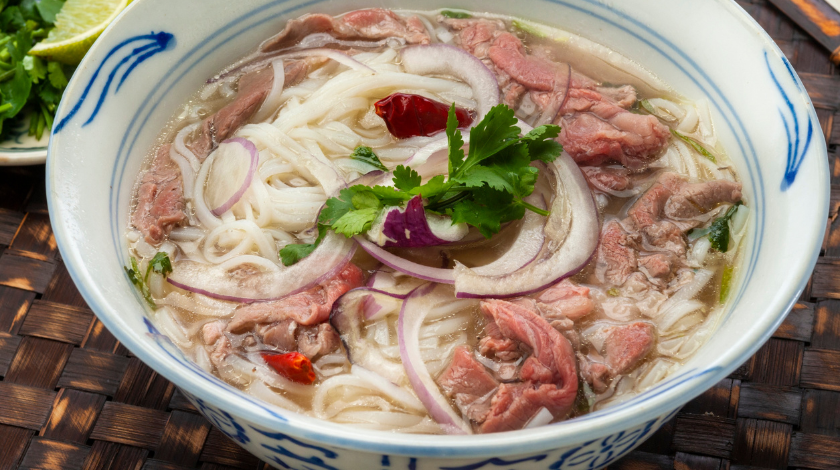
The noodles, called banh pho, are flat rice noodles about as wide as fettuccine. They are cooked separately and briefly, just until tender but still chewy. The assembly is an art form: noodles go in the bowl first, followed by thinly sliced raw beef (usually eye of round, sirloin, or tenderloin) that cooks instantly when the hot broth is ladled over it. Cooked brisket slices join the party, along with a sprinkle of thinly sliced white onion and chopped cilantro.
What really sets pho apart is the garnish plate that arrives with every bowl. This is non-negotiable in Vietnamese pho culture. You get a plate piled with Thai basil sprigs, bean sprouts, lime wedges, sliced jalapeños, and sometimes culantro (a sawtooth herb that looks like long cilantro). You also get bottles of hoisin sauce and sriracha. The proper way to eat pho is to taste the broth first, then add herbs and condiments gradually as you eat, customizing each bite. This interactive element is central to the pho experience and quite different from how Thai noodle soups are typically served.
Exploring Thai Noodle Soups: The Real Thai “Pho”
If you are looking for the Thai equivalent of pho, you will not find a dish with that name, but you will find several noodle soups that satisfy similar cravings in completely different ways. Thailand has a rich noodle soup tradition that is just as deep as Vietnam’s, though less famous internationally.
The closest Thai counterpart to pho is probably guay tiew ruea, or boat noodles. These originated with vendors selling soup from boats along Bangkok’s canals, which is why they are traditionally served in small bowls—it was impractical to hand out large bowls of hot soup across the water. Boat noodles feature a dark, rich broth made with pork or beef bones, various soy sauces, and a unique ingredient: blood. Yes, fresh blood is added to the broth to give it body and richness. Before you get squeamish, know that it does not taste like blood at all; it just creates a velvety texture. The broth is seasoned with cinnamon, star anise, and sometimes pandan leaves, giving it a flavor profile that actually shares some DNA with pho, but with a distinctly Thai twist.
Then there is tom yum noodle soup, which could not be more different from pho. Tom yum is famous for its hot-and-sour flavor profile, driven by lemongrass, galangal (a rhizome similar to ginger but with a piney, citrusy flavor), kaffir lime leaves, and lime juice. It is spicy, assertive, and wakes up your palate rather than soothing it. When served with noodles, it becomes a completely different experience from pho—brighter, sharper, more aggressive.
Tom kha takes things in a completely different direction with its coconut milk base. This soup is creamy, slightly sweet, and aromatic with galangal and lemongrass. When noodles are added, you get a rich, comforting bowl that feels more like a hug than a kick, while still carrying Thai cuisine’s signature balance of flavors.
Thai noodle soups also use a wider variety of noodle types than pho. While pho strictly uses flat rice noodles, Thai soups might use rice vermicelli (sen mee), small rice noodles (sen lek), glass noodles (woon sen), fresh wide rice noodles (sen yai), or even egg noodles (bamee). The protein options are more diverse, too—pork balls, fish balls, sliced pork, minced pork, seafood, or combinations thereof.
Pho vs Pad Thai: Why These Get Confused
Another source of the “pho Thai” confusion comes from conflating pho with pad thai. Both are iconic noodle dishes from Southeast Asia, both appear on pan-Asian restaurant menus, and both have entered the Western culinary lexicon. But they could not be more different in execution.
Pad Thai is a stir-fried noodle dish, not a soup. It uses rehydrated rice noodles, then tosses them in a hot wok with eggs, tofu, bean sprouts, scallions, and protein (usually shrimp or chicken). The sauce is a combination of tamarind paste, fish sauce, palm sugar, and lime, creating a sweet-sour-salty balance that defines Thai cooking. It is finished with crushed peanuts and a lime wedge. There is no broth involved, no sipping required, and the eating experience is completely different from slurping a bowl of soup.
Pho, as we have established, is all about the broth. It is a soup first and foremost, with the noodles acting more as a vehicle for the liquid gold they swim in. The flavors are more subtle, more aromatic, less punchy than pad thai. Where pad thai hits you immediately with its tamarind tang and wok hei char, pho seduces you slowly with its spice-infused beefiness.
I think people confuse them because they are often the only two noodle dishes someone might recognize on a Southeast Asian menu. If you are new to these cuisines, “pho” and “pad thai” serve as shorthand for “Vietnamese noodles” and “Thai noodles,” respectively, even though both countries have dozens of other noodle dishes worth exploring.
The Role of Thai Basil in Pho
Here is where things get linguistically interesting and probably contribute to the confusion. Pho is traditionally garnished with Thai basil (hung que in Vietnamese). The herb has purple stems, pointed leaves, and a licorice-like flavor that is distinct from Italian sweet basil. It is essential to the pho experience—you tear the leaves and let them wilt slightly in the hot broth, releasing their aroma.
The fact that this crucial pho ingredient has “Thai” in its name probably leads some people to assume the whole dish is Thai. It is an understandable mistake if you are unfamiliar with how ingredients travel across borders. Thai basil is used extensively in both Thai and Vietnamese cooking, just as cilantro appears in Mexican, Indian, and Southeast Asian cuisines. The herb does not determine the dish’s nationality.
If you cannot find Thai basil, regular Italian basil is a poor substitute—it is too sweet and lacks the anise notes. Better substitutes include holy basil (if you can find it) or a combination of Italian basil with a pinch of tamarind powder to mimic that slight sharpness. But honestly, if you are making pho at home, it is worth seeking out proper Thai basil at an Asian market. It makes that much difference.
I started growing Thai basil in my garden specifically for pho nights. It is surprisingly easy to grow—more drought-tolerant than Italian basil and less prone to bolting in heat. Having it fresh on hand has elevated my homemade pho from good to restaurant-quality.
Fusion Possibilities: When Pho Meets Thai Flavors
Now that we have established that pho is Vietnamese and not Thai, let us talk about what happens when you intentionally bring them together. Fusion cuisine gets a bad rap when it is done carelessly, but thoughtful fusion can create something new and delicious while respecting both traditions.
I have experimented with adding Thai elements to pho broth, and the results are interesting. Adding a stalk of lemongrass to the simmering broth gives it a citrusy brightness that works surprisingly well with the traditional spices. A few kaffir lime leaves add a floral note. Galangal can stand in for ginger (they are related) and provides a more complex, piney heat. These additions do not make the pho “Thai”—they make it lemongrass pho or kaffir lime pho, which is a different thing entirely.
What you should not do is add coconut milk to pho broth (that makes it something else entirely, possibly closer to tom kha), or use Thai curry pastes (which would overwhelm the delicate spice balance), or add tamarind (which would sour the broth inappropriately). The beauty of pho is its clarity and subtlety; Thai flavors tend to be bolder and would bully the pho aromatics into submission.
That said, there is room for a “Southeast Asian noodle soup” category where chefs deliberately blend techniques. I have had a “pho Thai” fusion bowl at a modern Asian restaurant in Los Angeles that used pho-style beef broth as a base, with Thai chili jam, fish cake slices, and a tom yum-inspired garnish of cilantro and fried garlic. It was not authentic to either tradition, but it was delicious. The key is that the restaurant was clear about what it was offering—fusion, not authenticity.
How to Choose: Pho or Thai Noodle Soup?
You are craving noodles in broth and standing in front of a row of restaurants with both Vietnamese and Thai options. How do you decide? Here is my mood-based guide developed over years of noodle soup obsession.
Choose pho when you want comfort, when you are feeling under the weather, when it is cold outside, or when you want something that feels nourishing and gentle. Pho is the chicken soup of Vietnam—it heals, it soothes, it restores. The warm spices like cinnamon and star anise have a grounding quality. I always crave pho on rainy days or when I am hungover.
Choose Thai noodle soup (whether boat noodles, tom yum, or tom kha) when you want excitement, when your palate feels dull and needs waking up, when it is hot outside, and you want to sweat out the humidity, or when you crave complexity with a kick. Thai soups are more stimulating than soothing. I go for Thai noodle soup when I need a flavor explosion or when I want something that feels more “fun” than “nurturing.”
Nutritionally, pho tends to be lighter in calories if you stick to the broth and noodles, though it can be high in sodium. The beef provides protein, and the herbs offer antioxidants. Thai soups vary widely—tom yum is very light, tom kha is richer from coconut milk, and boat noodles are surprisingly hearty. Both cuisines use fish sauce, which adds sodium but also umami depth.
Price-wise, both are generally affordable comfort foods. In the United States, expect to pay $10-15 for a bowl at a restaurant, with pho sometimes slightly more expensive due to the beef bones and the long cooking time required for the broth.
Cooking at Home: Starter Recipes for Both
Making pho at home is a weekend project, not a weeknight dinner. The broth needs at least six hours of simmering, preferably more. However, you can make a big batch and freeze it in portions, which is what I do. My shortcut version uses a pressure cooker to reduce the time to about two hours, though purists would argue you lose some depth. For a beginner-friendly pho, start with chicken pho (pho ga), which requires less time than beef pho and is more forgiving.
Thai noodle soups are generally more weeknight-friendly. A basic Thai chicken noodle soup can come together in 45 minutes if you use store-bought broth enhanced with garlic, ginger, and a touch of fish sauce. For boat noodles, the broth is more complex, but tom yum and tom kha bases are available as pastes (though fresh is always better).
Stock your pantry with these essentials to make either cuisine: fish sauce, soy sauce, rice noodles (various widths), star anise, cinnamon sticks, fresh ginger, garlic, limes, and Thai basil. With these building blocks, you are 80% of the way to either a Vietnamese or Thai noodle soup.
My best tip for beginners: do not rush the aromatics. Whether you are charring onion and ginger for pho or smashing lemongrass for Thai soup, taking time with these foundational steps makes the difference between a good soup and a great one. I learned this the hard way after making flat pho broth by skipping the charring step once. Never again.
Conclusion
The next time you find yourself searching for “pho Thai,” remember what you have learned here. Pho is Vietnamese—a delicate, aromatic beef noodle soup that represents centuries of culinary tradition. Thai noodle soups are equally wonderful but distinctly different, offering bolder, more varied flavor profiles that reflect Thailand’s own rich food culture. Rather than conflating them, celebrate their differences. Learn to recognize when you want the gentle comfort of pho versus the exciting punch of Thai soup. Your palate will be richer for it, and you will never again stand confused at a restaurant counter. Both cuisines have so much to offer, and understanding their boundaries actually makes crossing between them more delicious.
Frequently Asked Questions
1. Is pho originally from Thailand? No, pho is originally from Vietnam, specifically the Hanoi region in northern Vietnam. It developed in the early 20th century and is considered Vietnam’s national dish.
2. Why do so many people think pho is Thai? The confusion likely stems from the popularity of Thai restaurants in Western countries, the presence of similar ingredients like rice noodles and Thai basil, and the fact that both cuisines are Southeast Asian. Additionally, pan-Asian fusion restaurants often blur culinary boundaries.
3. What is the Thai version of pho? While there is no direct Thai equivalent, Thai boat noodles (guay tiew ruea) share some similarities with pho, including the use of beef or pork broth and spices like cinnamon and star anise. However, boat noodles are distinct with their darker broth and addition of blood.
4. Can I use Thai basil in pho? Yes, absolutely. Thai basil (hung que) is the traditional basil used in pho, not Italian sweet basil. It has purple stems and a licorice-like flavor, both of which are essential to authentic pho.
5. What is the difference between pho and pad thai? Pho is a Vietnamese soup with rice noodles in beef or chicken broth, while pad thai is a Thai stir-fried noodle dish with no broth. They are completely different preparations despite both using rice noodles.
6. Is pho healthier than Thai noodle soup? It depends on the specific dish. Pho is generally light and broth-based, while Thai soups range from light (tom yum) to rich (tom kha with coconut milk). Both can be healthy options depending on ingredients and portion sizes.
7. Can I make a fusion pho Thai dish? Yes, fusion is possible, but it requires understanding both traditions. Adding Thai elements like lemongrass or kaffir lime to pho broth can work, but adding coconut milk or curry paste would fundamentally change the dish into something else.
8. Why is pho broth clear while some Thai soups are cloudy? Pho broth is carefully simmered and skimmed to achieve clarity, a mark of quality. Thai soups like tom kha are intentionally creamy from coconut milk, while others like boat noodles are darkened by soy sauce and blood.
9. What noodles should I use for Thai soup vs pho? Pho traditionally uses flat rice noodles (banh pho). Thai soups use various noodles, including rice vermicelli, small rice noodles, glass noodles, or egg noodles, depending on the specific dish.
10. Where can I find authentic pho or Thai noodle soup? Look for restaurants that specialize in one cuisine rather than pan-Asian establishments. For pho, seek Vietnamese-owned shops with Vietnamese signage. For Thai soup, look for Thai restaurants that offer specific regional varieties beyond just pad thai.